October 8, 2026
Should My Wedding Dress Be White
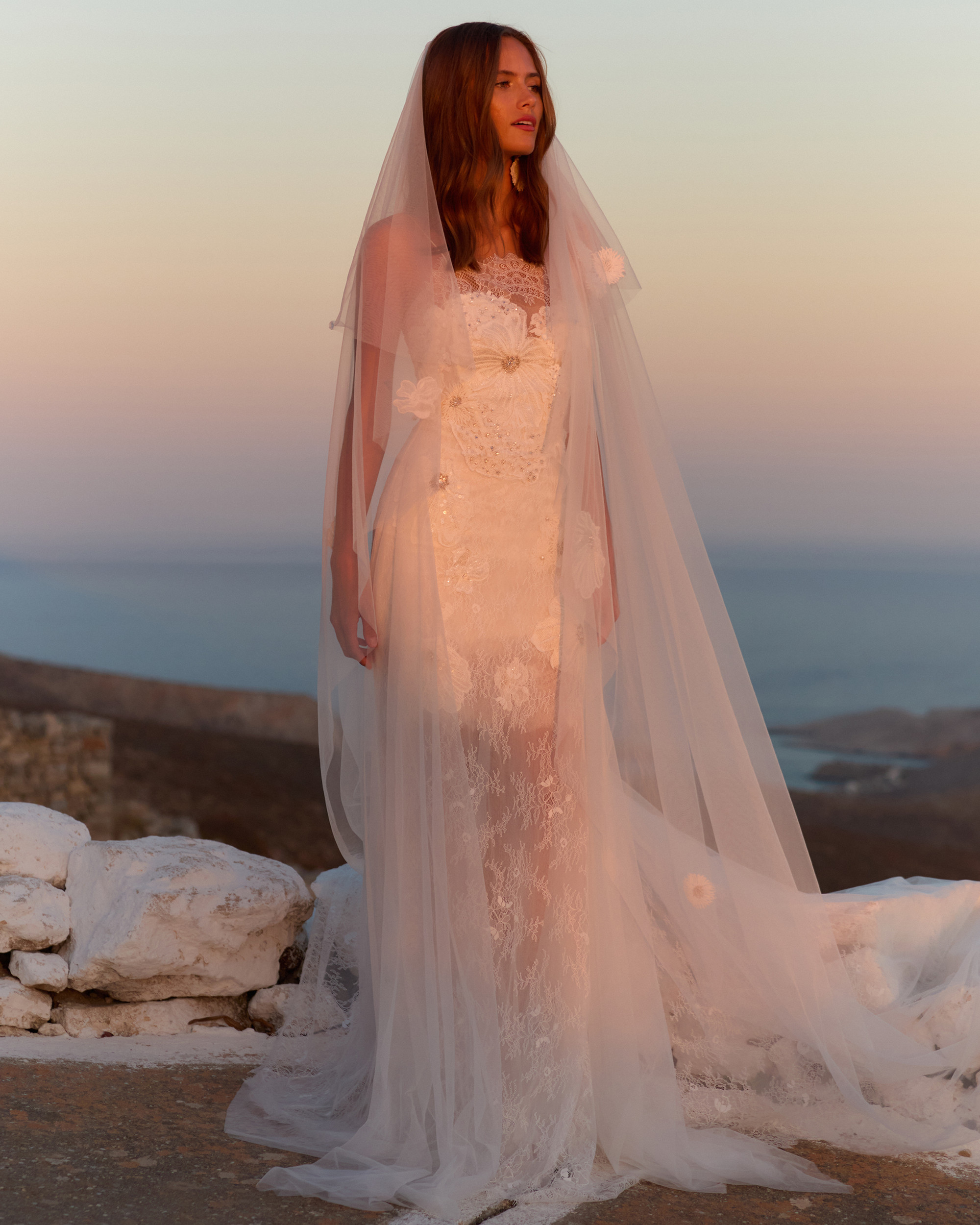
Many brides begin wedding dress shopping assuming their gown should be pure white.
But one of the first surprises when you start trying wedding dresses is that many of the dresses you think are white are actually ivory.
So, does your wedding dress need to be white?
No. The right colour is the one that works with you, the fabric and the design of your dress.
Is ivory the same as white?
No.
Pure white is a brighter, crisper shade, while ivory is slightly softer and warmer.
But modern bridal ivory doesn't necessarily look cream or yellow. In fact, many brides try on an ivory wedding dress and assume it's white until we tell them otherwise.
Ivory can simply look like a softer white.
Are most wedding dresses white or ivory?
Today, many international bridal designers create the majority of their gowns in ivory rather than pure white.
Different designers may also offer other options, including off-white, champagne, nude or blush undertones.
So don't be surprised if the “white dress” you fall in love with is technically called ivory.
Will an ivory wedding dress look yellow?
This is something brides often worry about.
A modern ivory wedding dress shouldn't automatically look yellow. How the colour appears depends enormously on the fabric, lighting and undertone.
An ivory satin, for example, can look very different from an ivory crepe or chiffon.
Don't judge the colour by its name alone. Look at the actual dress on you.
Does the fabric change how the colour looks?
Absolutely.
Satin reflects light and can make ivory appear richer and more luminous.
Crepe has a matte surface, so the same shade may appear softer.
Chiffon and tulle create another effect because you're seeing colour through transparent layers.
This is why two gowns described as “ivory” can look surprisingly different.
Why do some lace wedding dresses have a nude or champagne lining?
The colour underneath lace can completely change the way you see the design.
Ivory lace over an ivory lining creates a softer, more uniform look.
Put the same lace over nude, champagne or another contrasting undertone and suddenly the lace pattern becomes much more visible.
The flowers, embroidery or appliqué can almost appear to float over the skin.
So with a lace gown, you're not only choosing the colour of the lace. You're choosing what's underneath it too.
Can my wedding dress be champagne, nude or blush?
Of course.
Champagne and nude undertones can add warmth and dimension, particularly underneath lace or layers of tulle.
Blush can be extremely subtle. A gown doesn't necessarily look “pink”; sometimes the warmer undertone simply gives the dress more depth.
You may notice the detail and dimension before you even notice the colour.
Which wedding dress colour is best for my skin tone?
You'll find plenty of rules online telling you that a particular skin tone should wear white and another should wear ivory.
We wouldn't choose your wedding dress that way.
Your skin tone matters, but so do your hair, makeup, the fabric, the lining and the entire design of the gown.
The best way to know is very simple:
Try it on.
Should I only try white wedding dresses if I've always imagined myself in white?
No.
Don't eliminate a beautiful gown simply because the colour written on the label says ivory.
Try it first.
You may discover that the ivory gown you're wearing looks exactly like the white wedding dress you've always imagined.
And you may also discover that a champagne or nude-backed lace you never considered looks incredible on you.
Will ivory look different in my wedding photographs?
Lighting, surroundings, photography style and the fabric itself can all influence how a wedding dress appears in photographs.
But don't choose your gown based purely on fear that ivory will photograph yellow.
A good photographer will also understand how to photograph a wedding dress correctly.
Choose the shade that looks beautiful on you in real life first.
The Brideswings Tip
Don't choose the name of the colour. Choose the colour on you.
White, ivory, champagne, nude and blush are labels. What matters is how the shade works with your skin, the fabric and the design of your gown.
At Brideswings in Kifissia, Athens, we encourage brides to try different shades rather than deciding in advance that their wedding dress must be pure white.
Because ultimately, the question isn't:
“Is my wedding dress white?”
It's:
“Do I love how this wedding dress looks on me?”