October 8, 2026
Wedding Dress Alterations: What Every Bride Should Know
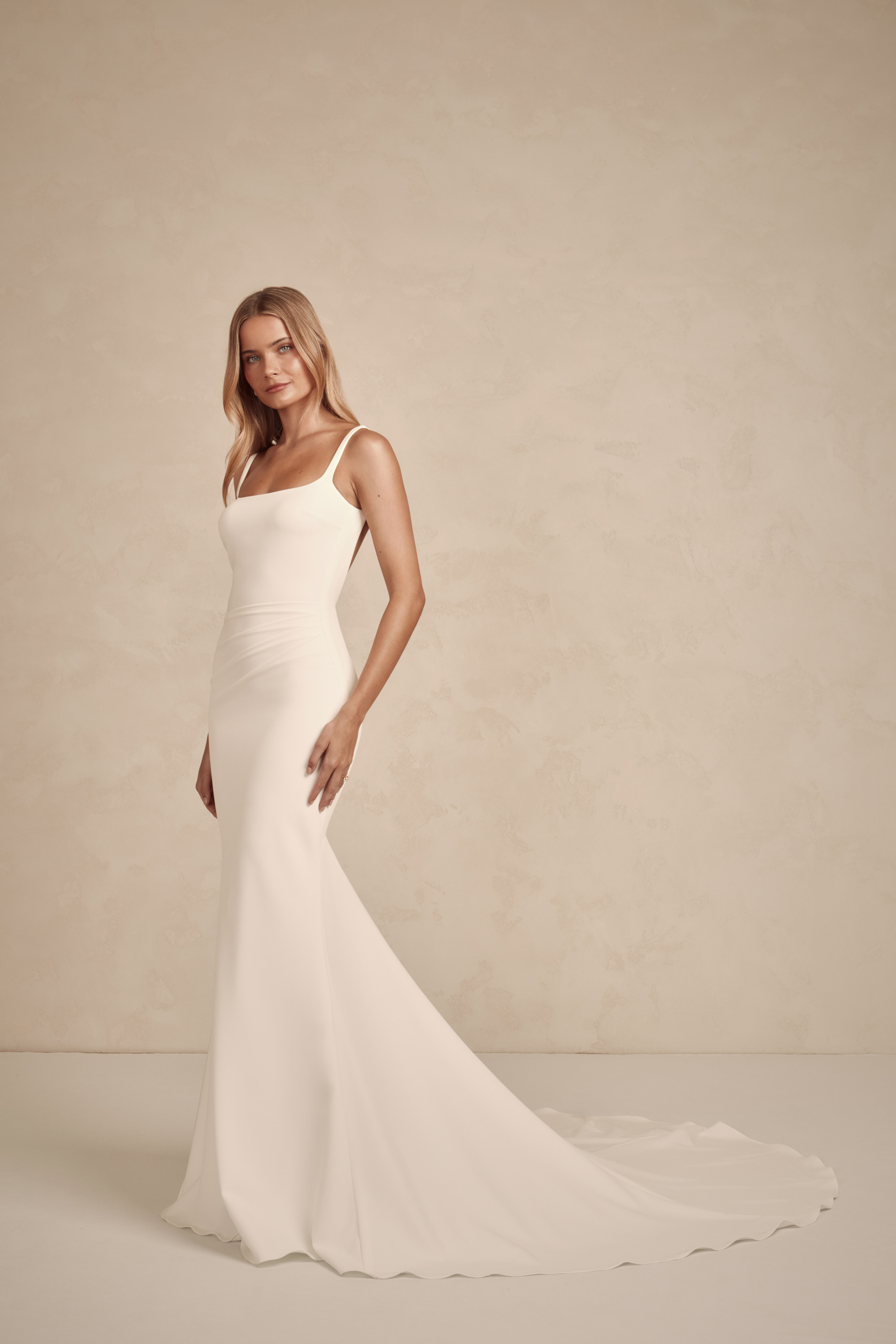
Finding your wedding dress is a big moment — but the dress you choose in the boutique is only the beginning of achieving the perfect fit.
Most wedding dresses will need some level of alteration. Every body is different, and even a gown ordered in the correct size may need adjustments to sit exactly as it should.
The important thing to remember is:
Alterations should perfect your wedding dress — not completely redesign it.
What can usually be altered?
Some adjustments are a normal part of fitting a wedding dress.
The hem may need shortening, the waist or bodice may need refining, straps may need adjusting, and small changes can help the gown sit more beautifully on your body.
The exact alterations depend on the construction of the dress.
A clean crepe gown, a structured corset, a lace dress and a heavily embellished gown can all require very different work.
Not everything can — or should — be changed
It’s easy to try on a dress and think:
“I love it, but we can change this neckline, remove that detail, completely change the back and make the skirt different later.”
Sometimes changes are possible. But the more you alter the original design, the more complicated — and unpredictable — the result can become.
Necklines, corsetry, lace placement, boning, seams and internal construction are all connected to the way a gown has been designed.
If you already want to change several major elements, it may simply mean this isn’t the right dress for you.
Start with the right size
Bridal sizing can be different from the size you normally wear, so don’t become attached to the number on the label.
The goal is to order the size that gives the best starting point for your measurements and the construction of the particular gown.
Your bridal boutique should guide you through this when your dress is ordered.
Don’t plan around losing weight
Many brides say they intend to lose weight before the wedding.
Your dress, however, needs to be ordered and fitted according to real measurements — not a future measurement that may or may not happen.
Bodies naturally change, and small adjustments can often be managed during fittings.
But choosing the wrong size because you expect your body to change can create unnecessary problems later.
Bring your wedding shoes to your fittings
Once you’re at the stage of determining the final hem length, your shoes matter.
Even a small difference in heel height changes where the dress falls, so bring the shoes you intend to wear — or a pair with exactly the same heel height if your final shoes aren’t available yet.
The same applies to any important undergarments or accessories that may affect how the gown sits.
Give alterations enough time
Don’t leave your alterations until the last minute.
Some gowns need only straightforward adjustments. Others require several fittings, particularly when there is lace, corsetry, embellishment or more complicated construction.
Allow enough time for the process so that each adjustment can be made properly rather than under pressure immediately before the wedding.
The Brideswings Tip
When you’re choosing your wedding dress, choose it because you love the dress that is already in front of you.
Of course, alterations can make it fit beautifully and certain details can sometimes be adjusted.
But don’t buy a gown because you’re relying on someone to transform it into the dress you actually wanted.
A good alteration perfects the fit. It shouldn’t have to create an entirely different wedding dress.
At Brideswings in Kifissia, Athens, we consider the fit, construction and possible alterations from the moment a bride chooses her gown, so she understands what can realistically be achieved before making her final decision.