October 8, 2026
Wedding Dress Fabrics: What Should You Choose
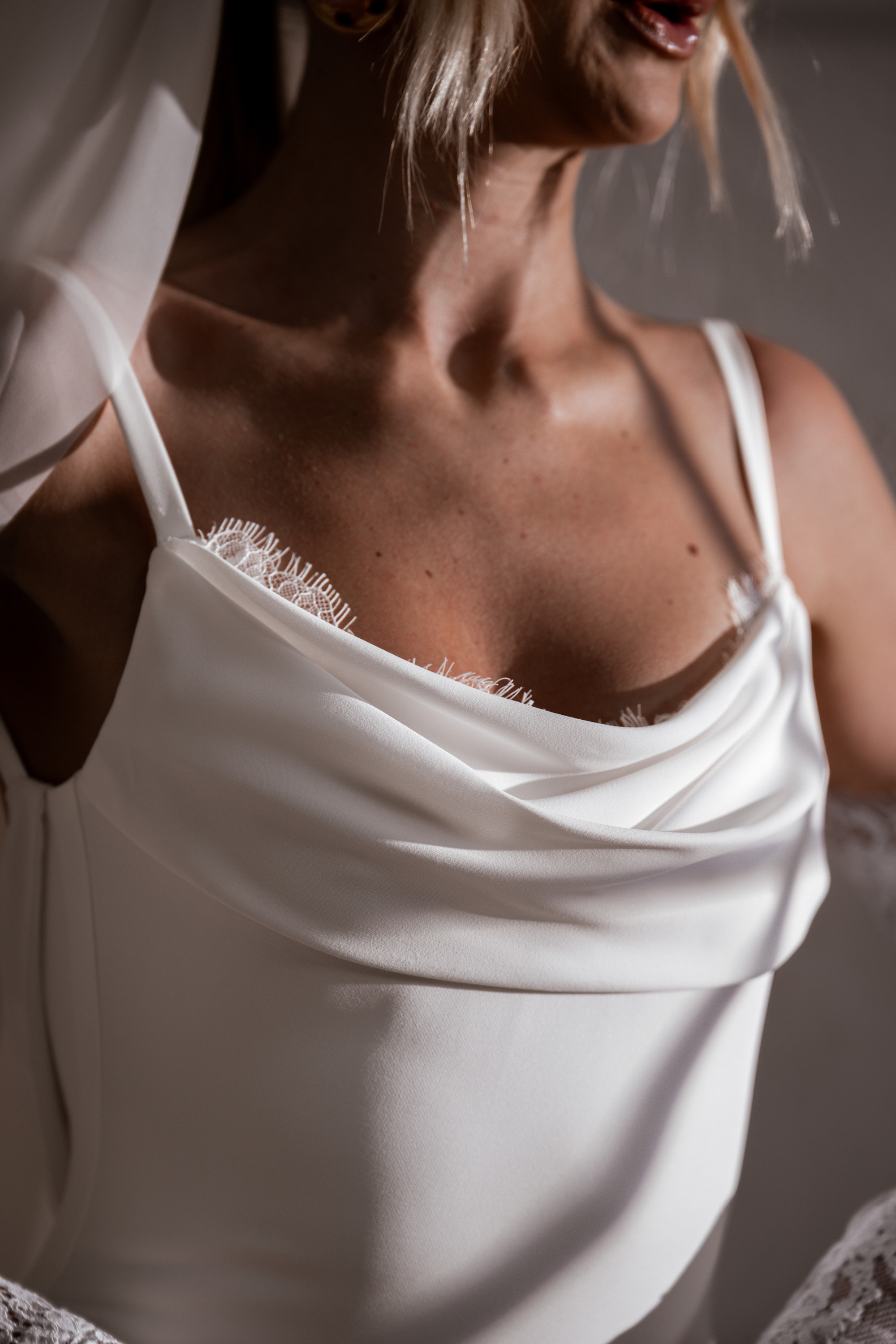
When choosing a wedding dress, brides often focus first on the silhouette. But fabric is one of the elements that most influences how a gown fits, moves and feels.
A fitted gown needs a fabric that works with the body. An A-line dress needs movement. A more dramatic ball gown may need structure.
Understanding the differences between bridal fabrics can help you understand not only what you like, but why you like it.
Crepe — the favourite for fitted gowns
Crepe is one of the most beautiful fabrics for a clean, fitted wedding dress.
Many bridal crepes have elasticity, allowing the fabric to follow the body while still creating a smooth, refined silhouette.
This makes crepe particularly suited to fitted gowns, where comfort and movement are just as important as the clean line of the dress.
For the bride who wants something modern, minimal and fitted without lace or embellishment, crepe is often one of the first fabrics we suggest.
Satin — from soft and flowing to elastic fitted
Not all satin is the same.
Softer satins can create beautiful movement and are particularly suited to A-line and flowing silhouettes. The smooth surface gives the gown a clean, luxurious appearance without the need for additional decoration.
There are also newer stretch satins, which combine the polished appearance of satin with elasticity, making satin an option for more fitted silhouettes as well.
At the other end of the spectrum is duchess satin — heavier, more structured and ideal when a gown needs to hold its shape.
A silk duchess satin can create an exceptionally luxurious finish and works beautifully for more structured A-line and ball gown silhouettes.
So “satin wedding dress” can actually describe very different gowns depending on the type and weight of satin used.
Lace — from delicate Chantilly to 3D florals
Lace deserves its own explanation because there isn’t simply one type of “lace wedding dress.”
For us, Chantilly lace is the queen of all laces.
Fine, soft and beautifully delicate, it creates texture without making a gown feel heavy. It can be romantic and feminine while still looking incredibly refined.
Then there are 3D floral laces, where appliqués and dimensional elements create volume and make the flowers appear to come away from the surface of the dress. These can create a much stronger, more contemporary statement.
There are also beaded and embellished laces, incorporating pearls, beads or other details that catch the light and give the gown a richer, more decorative finish.
The type of lace can completely change the personality of the dress.
Chiffon — soft, effortless and beautifully flowy
Chiffon is one of the lightest and most fluid bridal fabrics.
It doesn’t create the structure of satin or follow the body in the same way as stretch crepe. Instead, it falls softly and moves beautifully when you walk.
Chiffon may be silk or synthetic, and the composition affects its touch, movement and finish.
For brides looking for something soft, effortless and extremely flowy, chiffon can be a beautiful choice.
Don’t choose fabric only from photographs
Fabric is something you need to see, touch and move in.
A photograph cannot fully show the difference between a stretch crepe and satin, the delicacy of Chantilly lace, the dimension of a 3D floral appliqué or the movement of chiffon.
And two gowns with almost the same silhouette can feel completely different simply because they’re made from different fabrics.
The Brideswings Tip
When choosing your wedding dress, don’t think only about which silhouette you like.
Think about how you want your dress to behave.
Do you want it to follow your body? Flow when you walk? Hold a dramatic shape? Feel light and effortless? Or create texture through lace and embellishment?
At Brideswings in Kifissia, Athens, we believe understanding fabric is an important part of understanding what kind of wedding dress you truly love.
The silhouette gives a wedding dress its shape. The fabric gives it its character.